

Facing Life, Death and What Follows
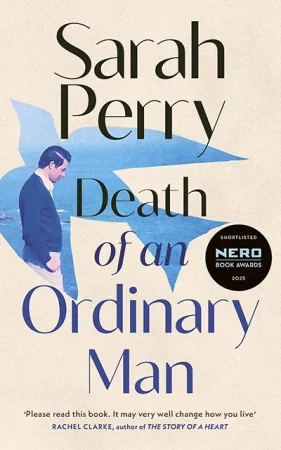
Sarah Perry’s Death of An Ordinary Man offers a steady, unflinching look at illness, care, and the decisions families are forced to make when a loved one’s health declines. Set against the rising cost of long-term care – now exceeding £5,000 a month in parts of Wales – the book quietly raises questions about dignity, responsibility, and the financial strain that can reshape family plans.
At its core, this is a personal account. Perry reflects on the deterioration of her father-in-law, David, charting his journey from an active, independent man to someone increasingly defined by pain, confusion and dependence. The writing does not shy away from detail. Instead, it leans into it, allowing readers to recognise familiar moments and emotions that often go unspoken.
Navigating the Realities of Care
The narrative is structured across three sections – Life, Death and After Life – and moves with a measured pace. In the early stages, there is a sense of normality, gradually disrupted by the realities of illness. As the story progresses, the focus shifts to the practical and emotional pressures placed on the family.
One of the most striking aspects is the ongoing debate around care: whether to keep David at home with support, or move him into a specialist facility. It is a dilemma many will recognise, balancing closeness and comfort against professional care and cost.
“Perry’s honesty stands out. She writes openly about the strain of caregiving – the physical exhaustion, the emotional weight, and the quieter feelings of frustration that can surface alongside love.”
Her admission that she “turned to prayer” as a way of coping adds another layer, suggesting a search for support beyond the immediate and tangible. The line “make haste to comfort us” captures that need with simple clarity.
The Subtle Grief of Long-Term Illness
There are moments that linger. One recalls her husband avoiding looking directly at his father in bed, because “the man in it didn’t much resemble the man he spoke to when they watched snooker”. It is a small detail, but it speaks volumes about the subtle grief that accompanies long-term illness – a loss that unfolds gradually rather than all at once.
The practical realities are also laid bare. Equipment such as adjustable beds, described as an “engine for dying on”, and the use of incontinence pads are presented without sentimentality. These details ground the narrative and make it accessible, particularly for readers who may be facing similar situations.

Memory, Grief, and Meaning
In the final section, Perry turns to what comes after. Drawing on Saul Bellow’s observation that “death is the dark backing that a mirror needs if we are able to see anything”, she reflects on grief, memory and meaning. The account of David’s funeral, and the shared experience of collective mourning, adds a sense of closure while reinforcing the book’s wider themes.
This is not an easy read, but it is a worthwhile one. It speaks directly to the realities of ageing, illness and loss, while offering insight into how families navigate them. For those facing similar circumstances, it may also provide a measure of understanding – and, perhaps, a degree of quiet reassurance.
We hope you enjoyed reading “Facing Life, Death and What Follows: A Review of Death of an Ordinary Man“. For more articles about books, follow this link.

Author: John Morris for Love Wrexham Magazine
John is an FA coach. He has worked with young players at Fulham, Chelsea, QPR and Wrexham, promoting resilience, tenacity and self-discipline. He is currently a consultant addressing growth mindsets to promote sports, education, and business performance.
