
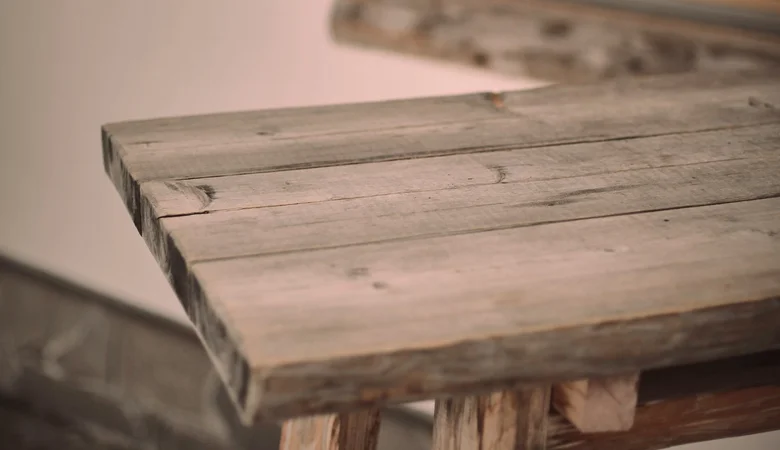
Walk into enough kitchens, cafés and spare rooms, and you start to spot the same thing. Thick, honest planks of timber are doing the work of shelves, tables and benches, and more often than not they began life on a building site.
Scaffold-board furniture has been part of British homes for a good while now. What’s striking is that it hasn’t worn out its welcome.
It started as a make-do solution, the kind of thing a joiner threw together from boards left spare at the end of a job. Somewhere along the way it stopped being make-do and became something people actively choose.
That’s the interesting part. Most interior fashions flare up and fade inside a season or two. This one has dug in and stayed.
A look that earns its keep
A lot of the appeal comes down to honesty. A scaffold board doesn’t pretend to be anything it isn’t. The grain sits open on the surface, the timber carries a few knocks from its first life, and the edges are solid all the way through rather than a thin veneer wrapped round chipboard. Against a room full of flat-pack sameness, that lived-in character stands out.
It’s also easy to live with. Pair reclaimed boards with black metal brackets, and you land the warm industrial look that has defined countless kitchens and coffee shops. Sand the same timber paler, give it a light oil, and it turns soft and almost Scandinavian. The material bends to whatever you want from it.
Then there’s the sheer strength. These boards are made to take the weight of workers and tools across scaffolding, so a shelf cut from one will hold a long row of books or a heavy pot without a wobble. You’re building with timber that was designed to be leaned on.
Cheaper, and worth doing right
Cost is the other half of the story, and it’s a sizeable half.
A length of scaffold board comes in at a fraction of the price of ready-made furniture, and it rewards effort rather than a big budget. That suits the growing number of people who’d sooner make something than buy it off a shelf.
Raw boards don’t work straight off the back of a van, mind you. They turn up rough and grey, still carrying site grit and flecks of old paint, so a little reading on how to treat scaffold boards before you build anything is what separates a splintery plank from a piece you’ll keep for years. Done properly, that means sanding and oiling a board for an indoor shelf, or sealing one so it can stand up to life outdoors.
A greener kind of furniture
There’s a thread of reuse running through all of this, and it’s part of why the look has stuck.
Searches for upcycling across the UK have nearly doubled since 2018, and furniture is one of the things Britons most like to rework with their own hands. Scaffold boards fit that instinct neatly. Studies have put the amount of furniture thrown out across the UK at around 22 million pieces a year, and building with reclaimed timber keeps solid, usable wood out of that pile and gives it a second run.
It’s a rare project where the cheaper option and the greener one happen to be the same thing.
What people build with them
The range is wider than most people expect.
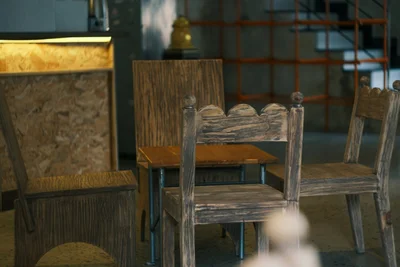
Shelving is the gateway project, a couple of boards and a set of brackets turned into open storage for a kitchen or alcove. From there it tends to grow. Dining tables and desks are popular, their tops glued up from several boards and set on anything from steel legs to a tube-and-clamp frame. Benches, window seats and shoe racks by the back door all suit the chunky proportions of the timber.
Gardens get a look in as well. Sealed properly, the same boards make raised beds, planters and sturdy outdoor seating that shrugs off a wet British summer.
Part of what makes all this doable at home is that the timber comes in standard lengths and can be cut down to whatever a project needs. You don’t have to be a cabinetmaker to get a tidy result, just patient with the measuring and honest about the finish.
More than a passing fashion
The look keeps its grip partly because every piece carries a bit of a story.
No two boards weather the same way. One might have a paint smudge from a job it did a decade ago, another a grain that darkens beautifully once it’s oiled. That’s the opposite of mass production, where every unit is identical by design. People have warmed to furniture that feels particular to them rather than picked from a catalogue.
There’s the satisfaction of having made the thing, too. A shelf you measured, cut and finished at the kitchen table means more than one that turned up in a flat cardboard box. It’s a small piece of craft in a home full of bought objects, and it usually starts a conversation when someone asks where you got it.
Built to be lived with
The honest truth is that scaffold-board furniture was never really a trend in the throwaway sense. It’s affordable, it’s tough, it looks good in almost any room, and it brings a bit of history into a house. Those are the qualities that outlast fashion rather than chase it.
Get the preparation right and a set of boards will serve as shelving, a desk or a dining table for a very long time. In a home full of things built to be replaced, there’s something quite satisfying about that.
Feature image by Wolfgang Rottmann on Unsplash.
We hope you enjoyed reading “The Scaffold-Board DIY Hack Taking British Homes By Storm”. Click here for more articles about your home and garden.

