

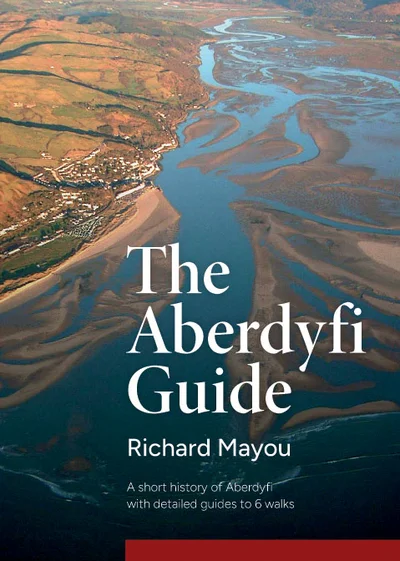
John T Morris reviews The Aberdyfi Guide, Richard Mayou’s six walks through the hidden history of an often-overlooked coastal village.
More and more people now head outdoors to walk for fitness, health and pleasure. For many of them, walking also sparks a keen interest in the history, culture and language of the places they explore. In The Aberdyfi Guide, retired Oxford professor Richard Mayou reveals just how much the often-overlooked village of Aberdyfi has to offer.
Inside The Aberdyfi Guide
Walking to Understand an Under-Appreciated Past
Walking has become a popular way for individuals and families to stay fit and healthy. At the same time, it has given many people a real interest in the past. In particular, walkers want to know how local people once worked and lived, and how that shaped today’s community.
Many walkers already know the beauty and challenge of Eryri’s peaks, including Cadair Idris, Aran Fawddwy and Mynydd Tan-y-Coed. Others feel more at home along the coast around Borth, Ynyslas, Aberystwyth and Tywyn. Yet walkers often pass by one area of real coastal beauty and historical richness.
That place is Aberdyfi, a village at the mouth of the River Dyfi. Thankfully, Richard Mayou’s The Aberdyfi Guide now gives it the attention it deserves. Through six walks, the book invites you to explore the village and its fascinating story.
About the Book and Its Author
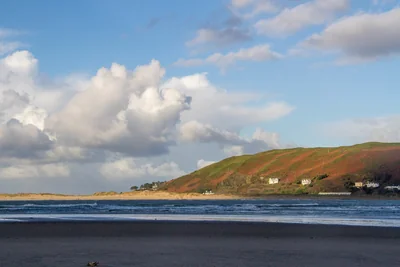
Richard Mayou, a retired professor of psychiatry at the University of Oxford, has written an excellently researched and illustrated book. In it, he shows readers how Aberdyfi once sat at the centre of a buoyant mid Wales economy. Mines, quarries, fishing and the river trade all drove that economy.
Throughout the book, Richard’s own appreciation of the area’s majestic scenery shines through. He brings key historical landmarks to life within an enthralling, flowing narrative. Moreover, an outstanding range of historical photographs, maps and drawings enhances the text.
The wealth of information will enthuse walkers of every level of experience. As a result, many readers will feel encouraged to tackle the book’s six walks. Each one is well planned, detailed and set within or around Aberdyfi.
From Simple Mooring to Busy Harbour
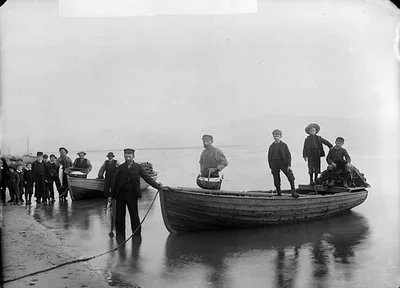
For walkers, the key section of the book unravels important aspects of industrial and community life. Aberdyfi began as a simple mooring, with a small stretch of shore where crews could beach their boats. Over time, however, it grew into something far more significant.
Richard points to several key markers of this development. One is Llawr Gam, the boatmen’s seat. Another is the wharf and jetty, which the Outward Bound Trust and local councils paid to rebuild in 1972.
Richard also vividly highlights the importance of Aberdyfi harbour to the wider area. In addition, he notes one of the village’s key features. Aberdyfi enjoys some of the mildest and sunniest weather in Wales.
How Aberdyfi Became a Holiday Destination
Thanks to its location and weather, Aberdyfi grew into an upmarket holiday centre. Richard traces this change within a well-focused historical timeline. In particular, he shows how tourism and house building increased once coastal shipping ended in the early twentieth century.
After the Second World War ended in 1945, the village continued to expand. Since then, second homes and holiday lets have spread through Aberdyfi. Consequently, the village looks very different from its working past.
Interestingly, Walk 5 reveals one of the most dramatic chapters in this story. Here, Richard reflects on the work of John Madin, a Birmingham architect and town planner. After designing Telford New Town, Madin received an invitation to extend and develop the village.
The Balkan Hill Holiday Homes Saga
Madin seized the opportunity and bought 29 acres on Balkan Hill. Remarkably, his influence secured planning permission for 401 holiday homes. However, builders only ever completed 41 of them.
Decades later, the story reached the UK’s highest court. In 2022, the Supreme Court ruled in favour of Parc Cenedlaethol Eryri, the Eryri (Snowdonia) National Park Authority. Richard reveals how that ruling finally brought an end to the original permission.
From a social history perspective, Aberdyfi has clearly changed. Once a thriving industrial and shipping base, it now centres on second homes and holiday lets. Naturally, this shift raises important questions about the community’s future.

The Verdict
A Missed Opportunity on Language and Culture
The narrative and presentation of the six walks are outstanding, and nothing here takes away from that. Even so, I believe Richard missed a chance to explore issues affecting Aberdyfi’s culture and language. Throughout the narrative, it becomes clear that Welsh was the first language of the village and the surrounding Dyfi industries.
Richard could have extended the value of this excellent text by addressing some crucial social questions. In particular, he could have opened a dialogue on how change has affected social and cultural progress. Social historians already ponder similar issues in areas such as the Lake District and Ynys Môn (Anglesey).
Clearly, these issues are just as relevant to the history of Aberdyfi. For that reason, a closer look at them would strengthen the book’s social history. So, what might those questions be?
Key Questions for Aberdyfi’s Future
First, are work opportunities available for young people in the area? Second, has the demand for second homes pushed up the cost of housing? Also, does that cost stop local families from buying homes?
Language raises further questions. For example, can children in the village receive their education in Welsh? Equally, do people still speak Welsh freely within the village?
Finally, has an incoming community swamped Welsh culture in Aberdyfi? Of course, these questions reach well beyond a walking guide. Still, exploring them would add real depth to Aberdyfi’s story.
Highly Recommended
Richard Mayou and publisher Y Lolfa deserve congratulations on an outstanding book. It details six walks that explore the rich industrial and social history of Aberdyfi. Furthermore, its wealth of photographs truly brings that history to life.
I highly recommend The Aberdyfi Guide to walkers of all abilities. It also makes an excellent resource for history students in schools and colleges. Diolch yn fawr iawn (thank you very much), Richard.
Above all, the book encourages readers to stop and look closely at Aberdyfi. Too often, people simply pass the village by. Thanks to this guide, they now have every reason to linger.
About the Reviewer: John T Morris
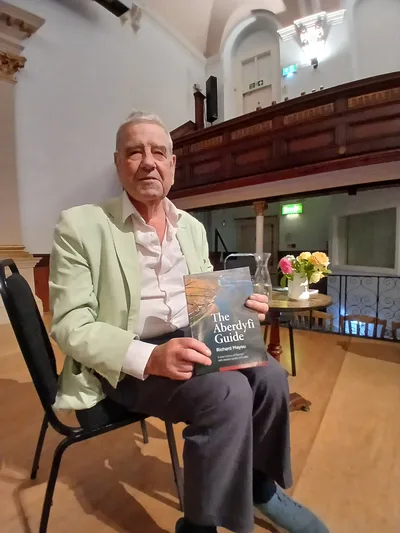
John T Morris (BA Hons, MEd, MPhil, DipPsych, CertEd) began his career teaching physical education in Ladbroke Grove. He also worked as a fitness coach at the Middle Row Boxing Club. Later, after completing research at Aberystwyth University, he moved to North Wales.
In North Wales, John led three specialist centres. Alongside this, he coached fitness and weight training in Queens Park, as well as fitness at Wrexham Rugby Club and the WRU. On top of that, he tutored on the Open University’s MA (Special Education) and PGCE courses.
John has also worked as an Ofsted inspector and consultant in schools and colleges across Wales and England. In that role, he helped raise aspirations and performance levels. Today, he works with groups on mindset, focusing on attitude, desire, resilience, drive, determination and confidence.
We hope you enjoyed reading John T Morris’s review of The Aberdyfi Guide. Click here for more articles about books.

Author: John Morris for Love Wrexham Magazine
John is an FA coach. He has worked with young players at Fulham, Chelsea, QPR and Wrexham, promoting resilience, tenacity and self-discipline. He is currently a consultant addressing growth mindsets to promote sports, education, and business performance.
