
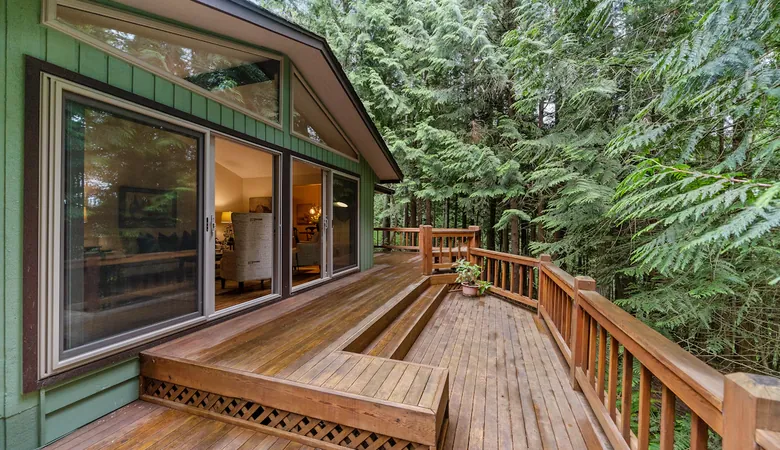
Exterior wood often shows clear signs of trouble before decay causes costly structural damage. Deck boards, railings and steps face repeated exposure to sunlight, rain and changing temperatures, which gradually weakens protective finishes.
A monthly visual check can reveal fading, cracks and rough patches while the damage is still manageable. Pay particular attention to exposed edges, shaded areas that dry slowly and boards located near downspouts or planters.
Surface Fading and Loss of Water Resistance
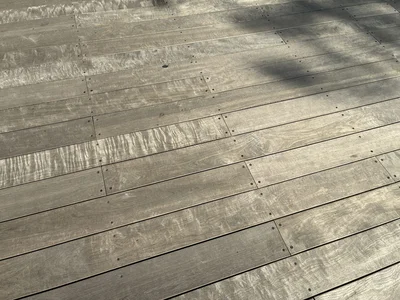
Color fading is often the first visible sign that a protective coating has started to break down. Sun-exposed boards may turn gray, while areas beneath furniture retain their original color. Uneven color alone doesn’t confirm decay, but it signals that the surface needs closer inspection.
Place a few drops of water on several boards. If the water beads for several minutes, the finish is still resisting moisture. If it darkens the wood and soaks in quickly, plan to clean and reseal the surface. Check several locations because high-traffic and exposed areas wear at different rates. Purdue Extension’s guide to paint failure problems also explains how moisture and poor surface preparation contribute to peeling and coating failure.
Splinters, Cracking and Surface Friction
Raised grain, splinters and rough boards indicate that weathering has begun to affect the wood fibers. Run a dry cloth lightly across the surface instead of using your bare hand. Snagged fabric helps locate sharp areas without risking an injury. Small surface checks may only need sanding and a compatible finish, but deep cracks can hold water and expand through repeated wet and dry cycles.
Pay close attention to movement underfoot. Loose boards, raised fasteners and a spongy feel call for prompt professional assessment. If roughness covers a large area or several coatings are peeling, professional deck restoration may include sanding, deep cleaning, staining and sealing. Keep people and pets away from damaged sections until protrusions and unstable boards have been addressed.
Choosing Between Repairs and Deck Restoration
Use localized repairs when the surrounding wood remains firm and most of the finish still repels water. One cracked board, a loose railing component or a small peeling patch can often be handled without treating the entire surface. Match replacement timber carefully and investigate why the damage occurred, especially near drains, pots and roof runoff.
Widespread fading, splintering or coating failure usually calls for full-surface treatment so the color and protection remain consistent. Before booking work, press questionable areas gently with a blunt tool and look underneath where possible.
Soft fibers, persistent dampness or dark staining may point to deeper deterioration. Delaying visible defects can increase the scope of work, as this guide to the cost of postponed maintenance explains. Structural concerns should be assessed before cosmetic work begins.
Long-Term Sealants That Stop Decay
Choose a finish designed for the wood species, existing coating and level of exposure. Penetrating oils soak into suitable timber and are generally straightforward to refresh. Film-forming stains and paints create a surface layer, but they require careful preparation because trapped moisture and poor adhesion can lead to flaking.
No product lasts indefinitely. Inspect the finish every six months and after periods of severe weather. A useful finish inspection guide recommends checking color, water repellency and exposed grain for early degradation. Clean off leaves, soil and organic growth, then allow the timber to dry fully before applying any product. Follow the manufacturer’s temperature, drying time and coverage instructions.
A simple water-drop test at the start of each season can catch coating failure before cracks deepen. When droplets stop beading, schedule cleaning and resealing during a dry weather window instead of waiting for the boards to become rough or unstable.
Image Credit: Unsplash
We hope you enjoyed reading “Telltale Signs Your Exterior Wood Needs Immediate Care”. Click here for more articles about your home and garden.

